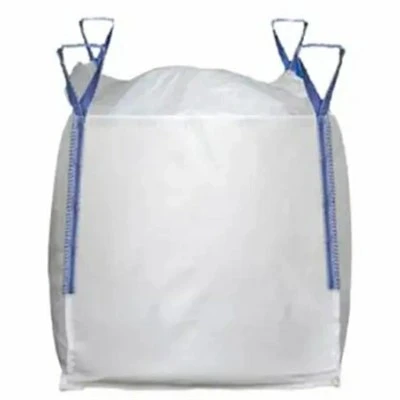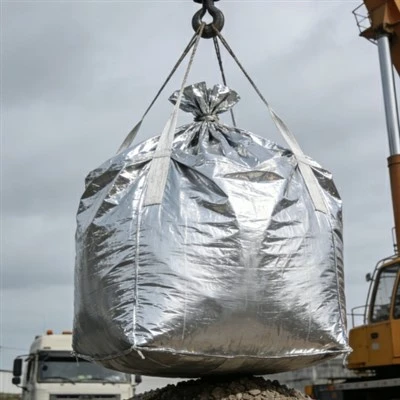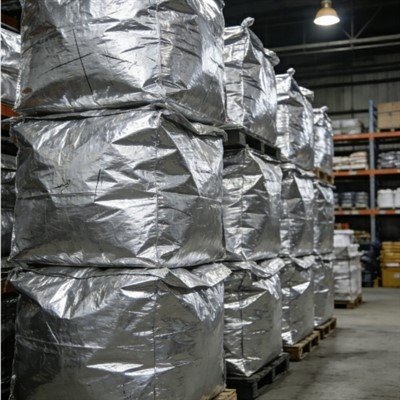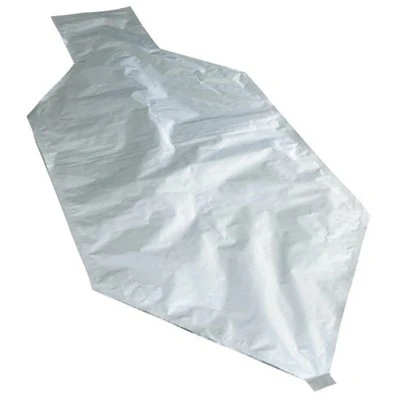
Unlike ordinary woven plastic bags, Flexible Intermediate Bulk Containers (FIBCs)-also known as jumbo bags-are designed to carry significantly larger loads than standard packaging materials. Consequently, the stitching of every component is a critical requirement; unlike simple plastic bags that can be adequately sealed via basic heat-sealing, FIBCs necessitate a multi-stage manufacturing process involving the assembly and integration of various distinct parts.
This aspect constitutes a vital and critical performance metric for FIBCs. National standards for woven plastics (GB/T8946) and laminated plastics (GB/T8947) explicitly define the required tensile loads for seams along both the side and bottom directions. The primary factors influencing seam strength include the type and variety of sewing thread used, stitch density (needle pitch), stitch pattern, the distance between the seam line (whether hemmed or folded) and the bag's edge, and the method of cutting (hot-cut vs. cold-cut).
Generally, manufacturers of FIBCs should establish internal control targets for each of these influencing factors. Regarding FIBCs specifically, national standards stipulate that the tensile strength of the main body seams must equal at least 67% of the bag's base strength, while the tensile strength of the bottom seams must equal at least 42% of the base strength. For the top closure of valve-type cement bags, it is recommended that strength requirements be treated in the same manner as those for bottom seams. Regarding the bottom seam strength of paper bags-which typically fail to meet the required targets-it is recommended that the design be switched to a pasted-bottom bag configuration instead. For laminated bags that have undergone cold-cutting, it is recommended that the edges be hemmed; this is because, with cold-cut edges, the stitching thread may potentially tear out the weft threads along with the warp threads. Finally, for woven bags where no specific strength requirements exist for the opening, the top edge may simply be overlocked (hemmed) around the circumference; in such cases, a denser stitch pattern and finer thread may be utilized.