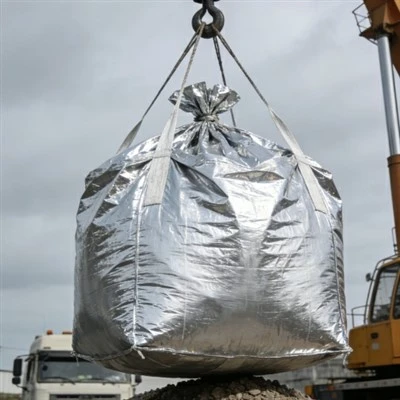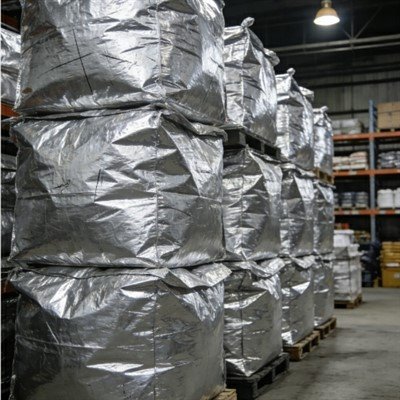
For bulk importers, fine chemical plants, mineral powder processors and agricultural ingredient manufacturers, the temperature tolerance of aluminum foil FIBC liners is a core factor when selecting bulk packaging. Many wholesale clients raise this question because their cargo often crosses multiple climate zones during sea and land transport. A liner that becomes brittle in cold weather or softens under hot, humid tropical conditions can compromise the moisture barrier, causing expensive cargo losses such as powder caking, discoloration and flavour degradation.
Our standard composite liner for aluminum foil FIBCs is engineered to perform reliably from -40°C to +80°C. This operating window covers most cold-chain, temperate and tropical logistics scenarios. In frigid environments such as northern winter storage or cold-region overland shipping, the liner maintains good flexibility instead of becoming rigid and cracking. Many ordinary low-grade liners develop tiny cracks at sub-zero temperatures, creating invisible pinholes that allow moisture to seep inside and ruin hygroscopic powders such as silica powder and calcium carbonate. Our biaxially stretched foil layer reduces this risk and keeps the vapor barrier intact under low-temperature cycling.
At the upper end of the range, the liner maintains stable performance under continuous exposure to tropical heat. It works well for warehouse storage and sealed container transit in hot and humid regions. It is worth clarifying that this rating describes ambient storage temperature rather than hot filling. If users pour freshly heated materials directly into the bag above 80°C, the composite film may soften, the seals may weaken, and the liner could separate from the outer woven fabric. For hot-fill materials, we advise cooling the cargo below the temperature limit before filling or contacting us for a custom high-temperature liner formula.
The multi-layer structure helps provide this wide temperature tolerance. The outer UV-stabilized woven fabric protects the whole bag from direct sunlight, while the middle biaxially stretched aluminum foil layer blocks moisture and oxygen. The inner contact layer can be switched to an antistatic grade for flammable dust applications without sacrificing temperature performance. We test finished liners in temperature chambers, repeatedly cycling between cold and hot conditions to check for delamination, pinholes and seal failure. Every batch inspection records liner flexibility and water vapor transmission rate after thermal cycling.
Temperature fluctuations also bring condensation risks, which many buyers overlook. Even if the liner itself withstands high and low temperatures, drastic temperature changes inside sealed containers can create condensation on the inner surface. For moisture-sensitive products such as onion powder, garlic powder and protein powder, we recommend combining the aluminum foil barrier with proper loading procedures and avoiding large temperature swings after sealing. The liner prevents external humidity from getting in, yet it cannot eliminate condensation formed by temperature shifts inside the closed bag.
This liner is suitable for both cold-region warehousing and tropical overseas shipments for standard bulk powder applications. If your project involves extreme conditions beyond this range, our technical team can adjust the film formula. We provide samples for clients to conduct their own simulated climate tests before placing bulk orders. Stable temperature resistance keeps the barrier consistent throughout long international shipments and helps reduce costly product quality claims.